Written With the Help of AI
CNET · USAHALLUCINATION
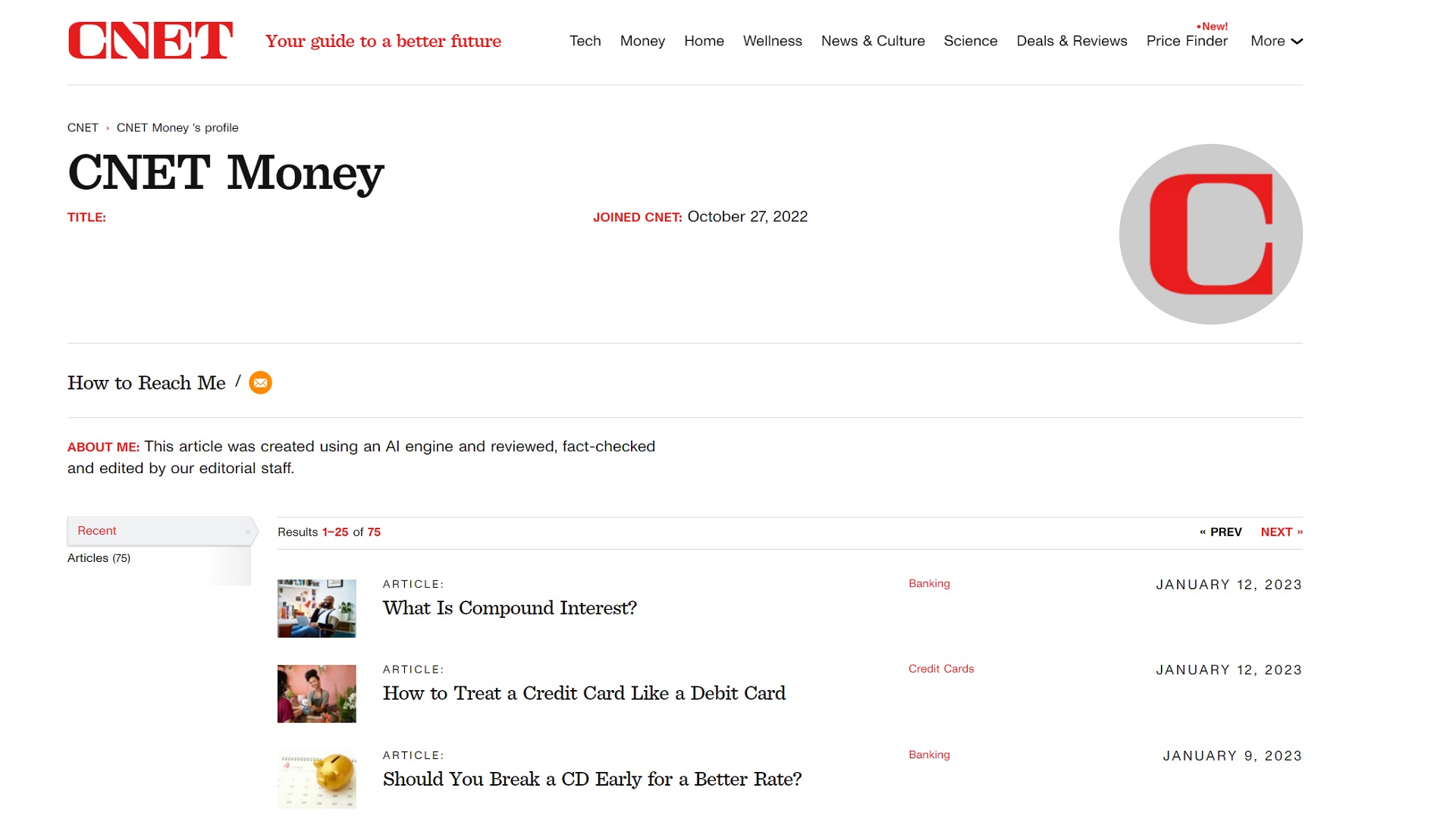
The disclosure label arrives only after the corrections.
CNET began quietly publishing AI-assisted financial explainers in late 2022 under the byline CNET Money Staff. The articles contained errors - basic arithmetic, mistaken interest formulas, conceptual mistakes about how compound returns work. When Futurism surfaced the practice in early 2023, CNET retroactively appended disclosure language: this article was written with the help of an AI engine. More than half of the AI-assisted articles were eventually corrected.
The episode demonstrated the order in which trust mechanisms now break. Disclosure does not arrive when the technology is deployed. It arrives when the technology fails publicly. The label is reactive, not preventive - a containment strategy rather than a contract with the reader. By the time CNET added the warning, the value of the warning had already been spent.
Combined with the Gannett experiments and the Sports Illustrated fabrications of the same year, CNET helped establish the pattern that triggered the Verification Economy. Audiences stopped treating no AI disclosure as proof of human authorship. Publishers had to start affirmatively marketing humanity, because silence was no longer convincing. The artifact is the post-hoc disclosure - a label that demonstrates exactly why a label is no longer enough.
Sources: www.shacknews.com ↗futurism.com ↗amp.cnn.com ↗www.engadget.com ↗