Morning Sun
ASAHI SHIMBUN · JAPANMEIJI PRESS
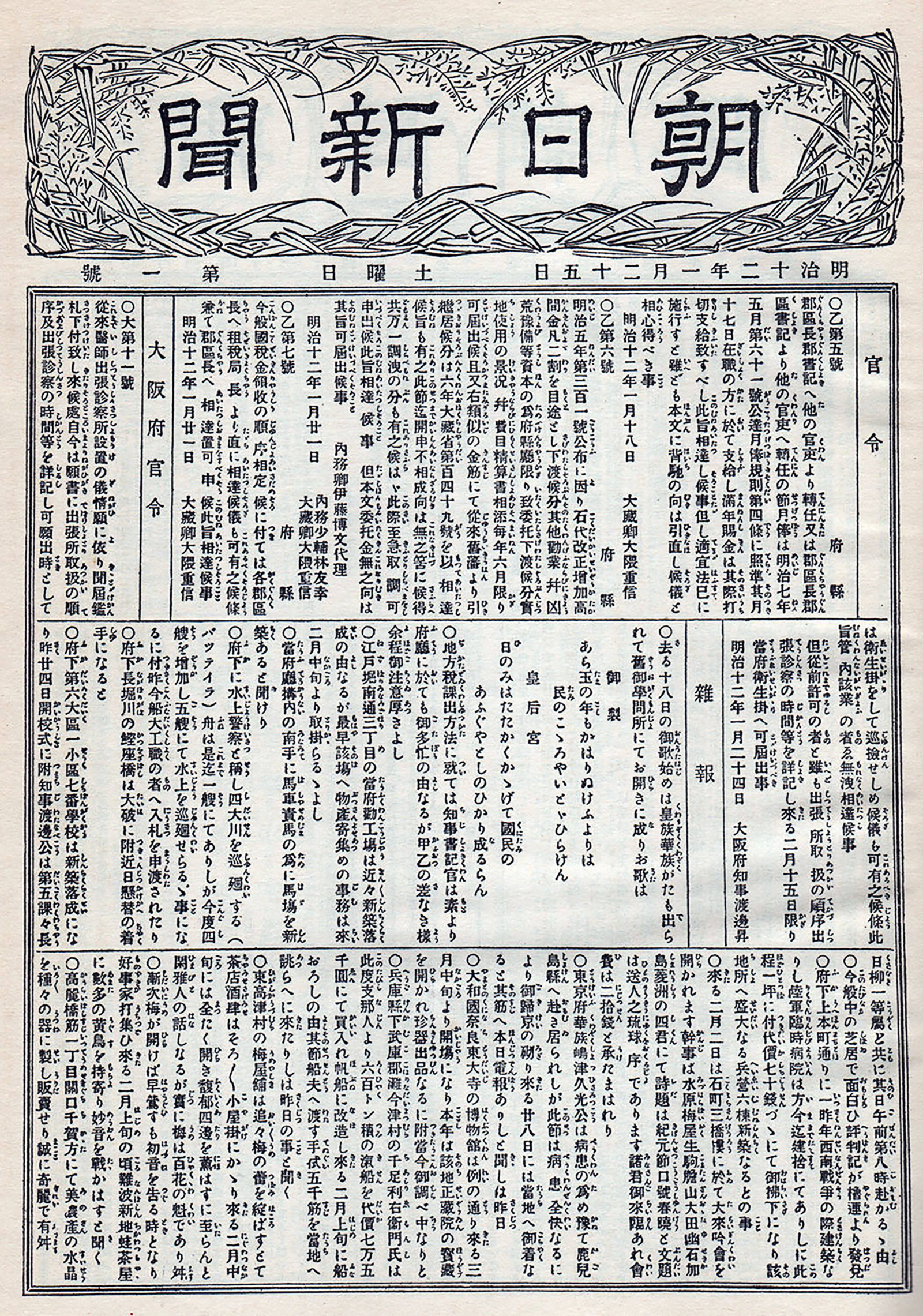
Trust in a militarizing society built through resistance to the prevailing orthodoxy.
Founded in Osaka on January 25, 1879, in the rapid modernization of the Meiji era. Asahi Shimbun (Morning Sun) launched as an illustrated four-page koshinbun - a “small newspaper” priced at one sen, aimed at a newly literate mass public. By 1881 it had shifted to an all-news format and was on its way to becoming a national daily of record.
The editorial position was progressive from the start: civil rights advocacy, support for democratic movements, anti-corruption investigations, demands for accountability from a state that was rapidly arming itself. The middle and upper classes that became the paper’s core readership trusted Asahi precisely because it served as a counterweight to the increasingly militaristic Japanese state.
The lesson is the inverse of the wire-service model. Asahi did not engineer trust by removing the narrator. It earned trust by making the narrator visibly oppositional. In a country sliding toward militarism, neutrality would have been a kind of complicity. The masthead built a constituency that wanted resistance to the official story.