You Furnish the Pictures and I'll Furnish the War
HEARST vs PULITZER · NEW YORKYELLOW JOURNALISM
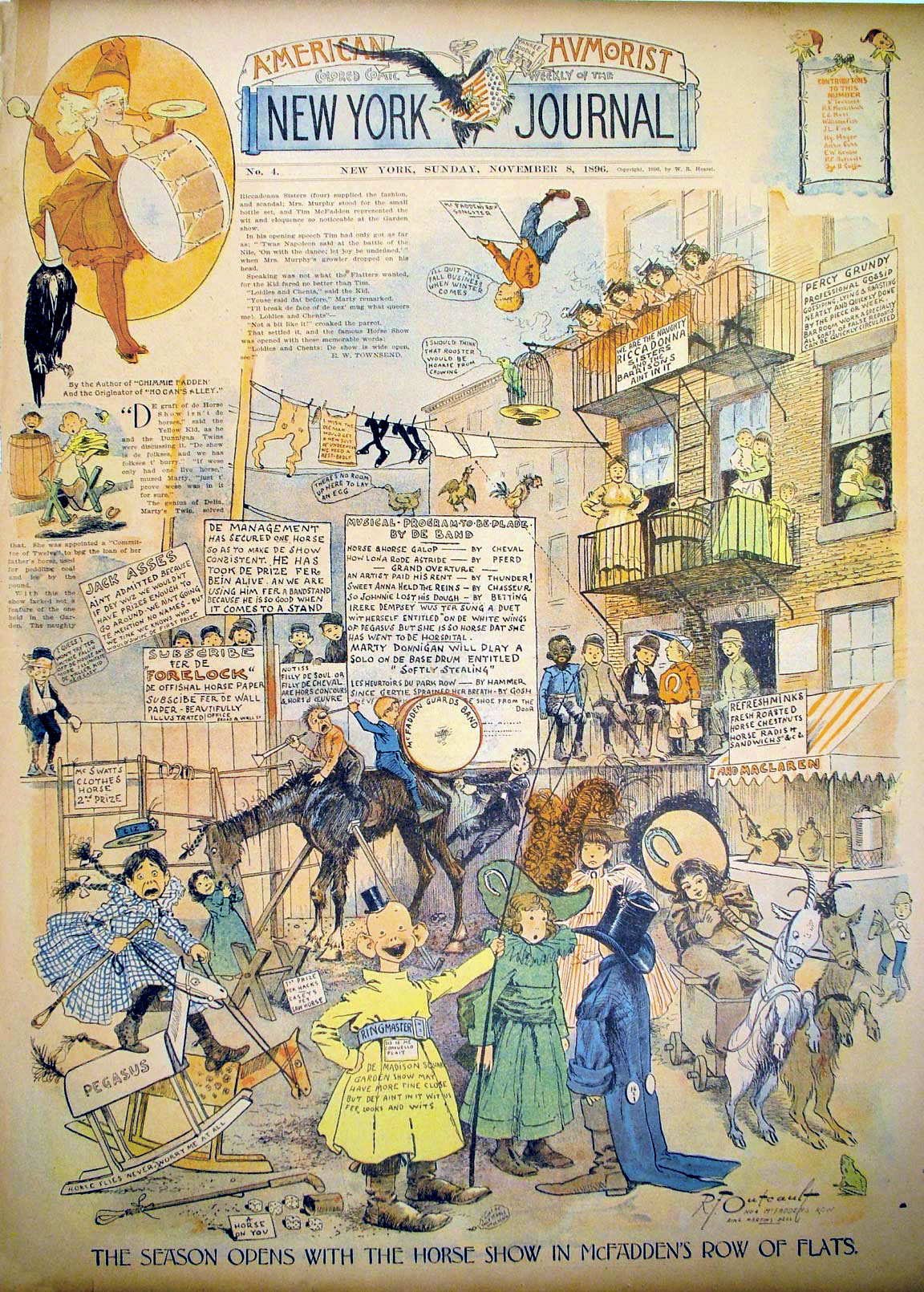
First case of journalism as participant in events rather than reporter of them.
No quote in the history of American journalism is more famous, nor more thoroughly fabricated, than William Randolph Hearst’s purported telegram to illustrator Frederic Remington: You furnish the pictures and I’ll furnish the war. The anecdote, first published in a 1901 memoir by correspondent James Creelman, claims that when Remington requested to leave Cuba in 1897 because there was no war to draw, Hearst demanded he stay and manufacture the casus belli. Hearst repeatedly denied the exchange, the original telegrams have never been found, and yet the myth survived because it perfectly encapsulated the swaggering arrogance of the yellow press.
The actual mechanics of the 1895-1898 circulation war between Hearst’s New York Journal and Joseph Pulitzer’s New York World were driven less by geopolitical machination than by the brutal economics of street-level news hawking. Both papers leaned on massive, sensational headlines and exaggerated accounts of Spanish atrocities to capture a working-class demographic. When the USS Maine exploded in Havana harbor in February 1898, the Journal instantly blamed a Spanish torpedo, accelerating public frenzy before any official naval investigation could conclude.
The supreme irony is that Hearst’s papers actually lost money during the conflict they helped engineer. The Journal spent an estimated $50,000 a week on cable tolls, dispatch boats, and correspondent salaries - an astronomical sum that decimated margins despite the temporary spike in readership. The legacy of the quote lies not in its historical truth but in its enduring utility as a cautionary frame for media-manufactured consent. The first case of a news organization branding itself as a cause. The Spanish-American War as a media product. The boundary between reporting and manufacturing news is the exhibition’s oldest theme.