The Spark
ISKRA · RUSSIACOLLECTIVE ORGANIZER
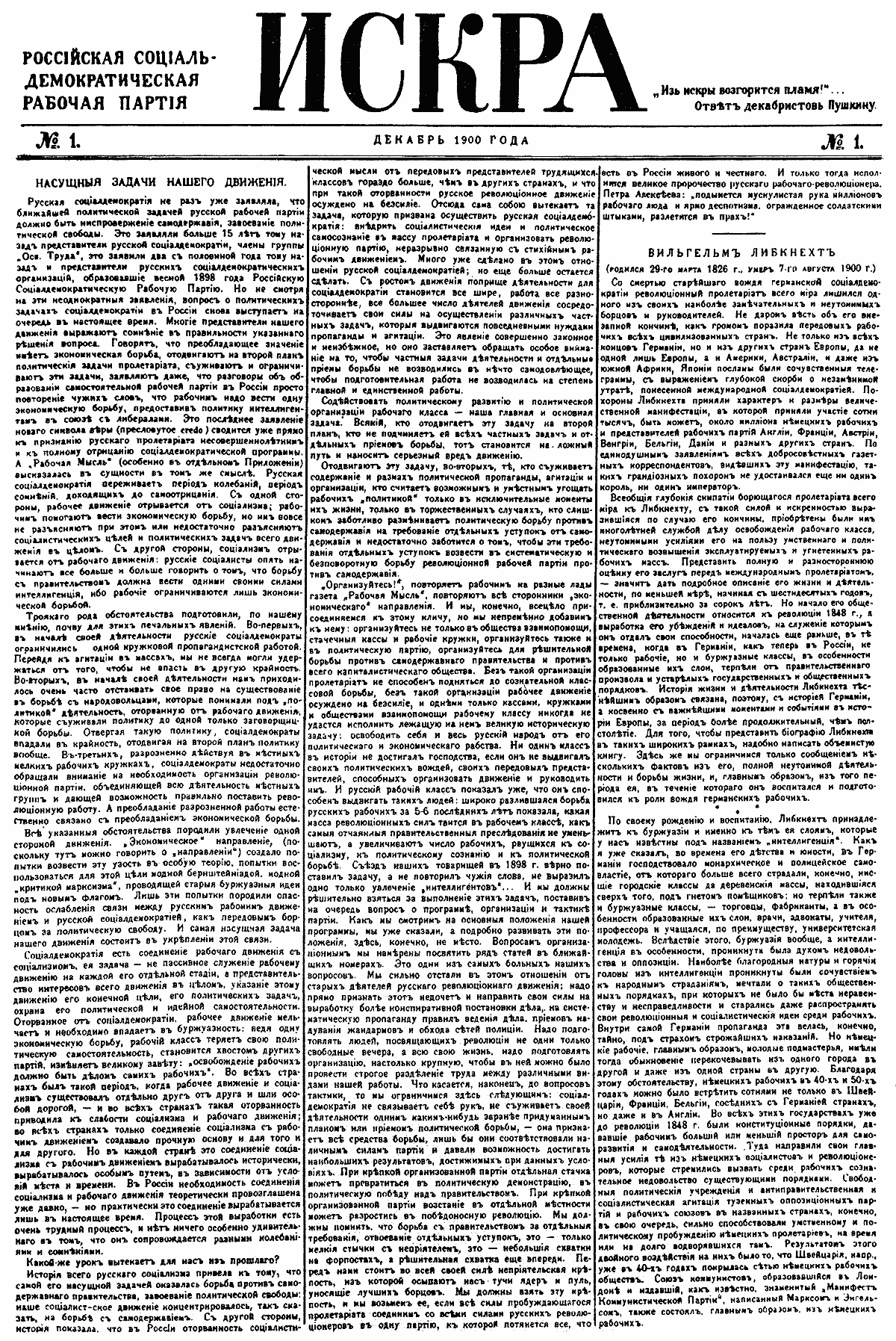
The newspaper as scaffolding for a political party. Truth defined as whatever advances the line.
In 1900, Vladimir Lenin and his associates founded Iskra (The Spark) in exile. In the Declaration of the Editorial Board in the first issue, Lenin made the argument that would define a century of party press. The paper, he wrote, would not be “a storehouse for various views.” It would be conducted along “a strictly defined tendency.”
Lenin’s vision turned the newspaper into something else entirely - a collective organizer. The underground couriers who smuggled Iskra into Russia, the agents who distributed it, the workers who read it secretly inside factories - they were not the audience. They were the scaffolding of a revolutionary party that did not yet exist. The paper made the party.
The trust claim was teleological. Iskra told the truth because it was building the inevitable socialist future. Bourgeois “neutrality” was, in this logic, a fiction designed to protect the class that benefited from neutrality. Iskra sits at the edge of this archive - it is press, but it is also infrastructure for a state. Its descendants, in the Soviet annex chapter, would forget that distinction entirely.
Sources: www.marxists.org ↗