Independent of Capital and the State
LE MONDE · FRANCEPOST-LIBERATION
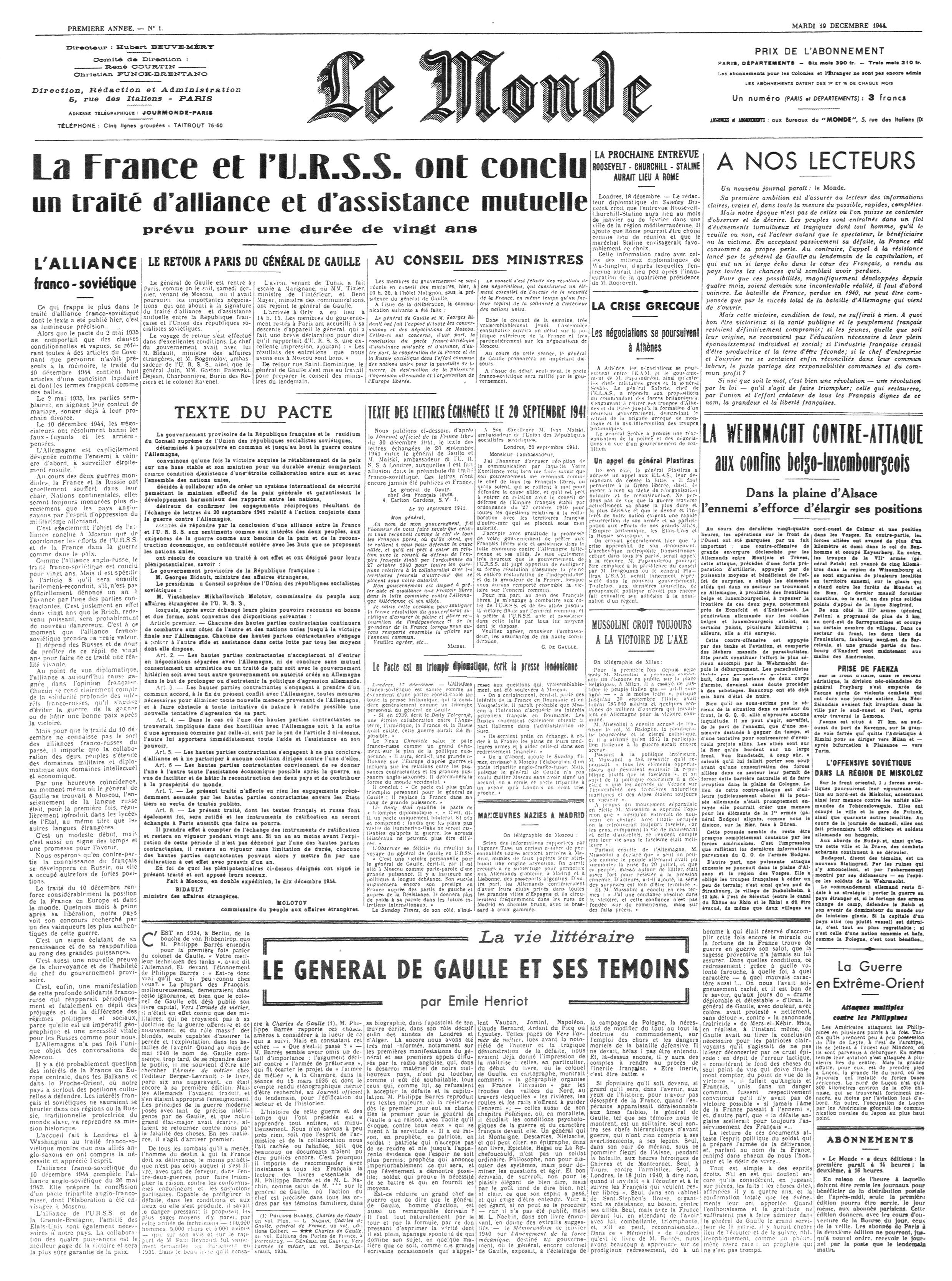
Independence engineered into the ownership structure - journalists holding veto power over the publisher.
Following the liberation of France, General de Gaulle asked Hubert Beuve-Méry to build a newspaper of reference for the nation. Beuve-Méry was a former correspondent who had resigned in protest over his previous employer’s appeasement of Hitler. He took over the offices and the gothic masthead of Le Temps, the discredited collaborationist paper. He hired only journalists who had refused to collaborate.
Beuve-Méry was “haunted by the memory of the pre-war French press, with its close political compromises and close links with money.” So the founding pitch of Le Monde was not a slogan. It was a corporate structure. The journalists became tenured financial stakeholders in the enterprise, holding the power to elect upper management and veto the appointment of the publisher. Independence was engineered into the ownership table.
Beuve-Méry then refused to be de Gaulle’s mouthpiece, clashing with the General over Indochina and Algeria. Writing under the pen name Sirius - a typo of Serious - he established Le Monde as analytical, austere, slow. The trust claim was structural and absolute: Le Monde cannot be bought by capital, and it cannot be bullied by the state. The “Golden Age” of print ended on this sentence.
Sources: ipi.media ↗www.opendemocracy.net ↗