All the News That's Fit to Print
THE NEW YORK TIMESBENCHMARK · 130 YR
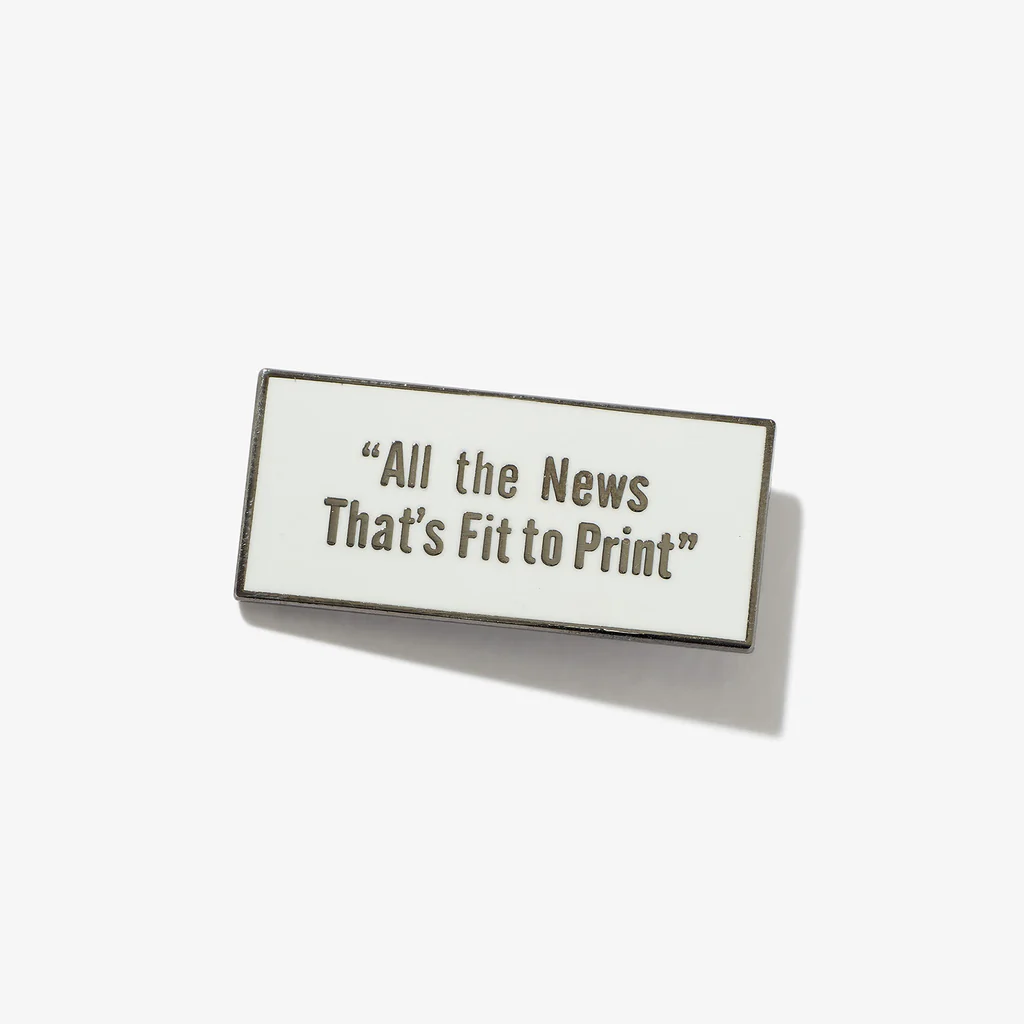
The first journalism slogan that contains a worldview. Counterbranding as identity.
In 1896, Adolph S. Ochs - a 38-year-old publisher from Tennessee - acquired the failing New York Times with $75,000 in borrowed money. The paper was hemorrhaging $1,000 a week, drowning in over $300,000 of debt, and trailing the sensationalist giants of Pulitzer and Hearst. To structurally differentiate his product from yellow journalism, Ochs pivoted hard toward sobriety and objective record-keeping. The slogan debuted not in the paper itself but as an illuminated electric advertising sign towering over Madison Square in October 1896. By February 1897 it had migrated to the front-page ear, where it has remained.
The performance of the phrase was dual-purpose. It promised readers an unpolluted information stream and signaled to elite advertisers that their products would sit alongside respectable, non-scandalous prose. The linkage of editorial standards to advertising standards effectively rescued the paper - circulation doubled within Ochs’s first year, and the publication was profitable by his third. One word - fit - did the entire ideological labor. Ochs was not claiming comprehensiveness. He was claiming judgment.
The claim was so totalizing that in 1960, Texas Congressman Wright Patman petitioned the Federal Trade Commission to investigate the slogan for false and misleading advertising, arguing it implied an objective superiority over other papers. The FTC declined, citing a lack of objective standards for measuring news fitness. The phrase inaugurated a century-long strategy of positioning the paper not as a daily periodical but as the definitive gatekeeper of the American public record - counterbranding as identity, still working 130 years later.