The Worker
ROBOTNIK · POLANDUNDERGROUND BIBUŁA
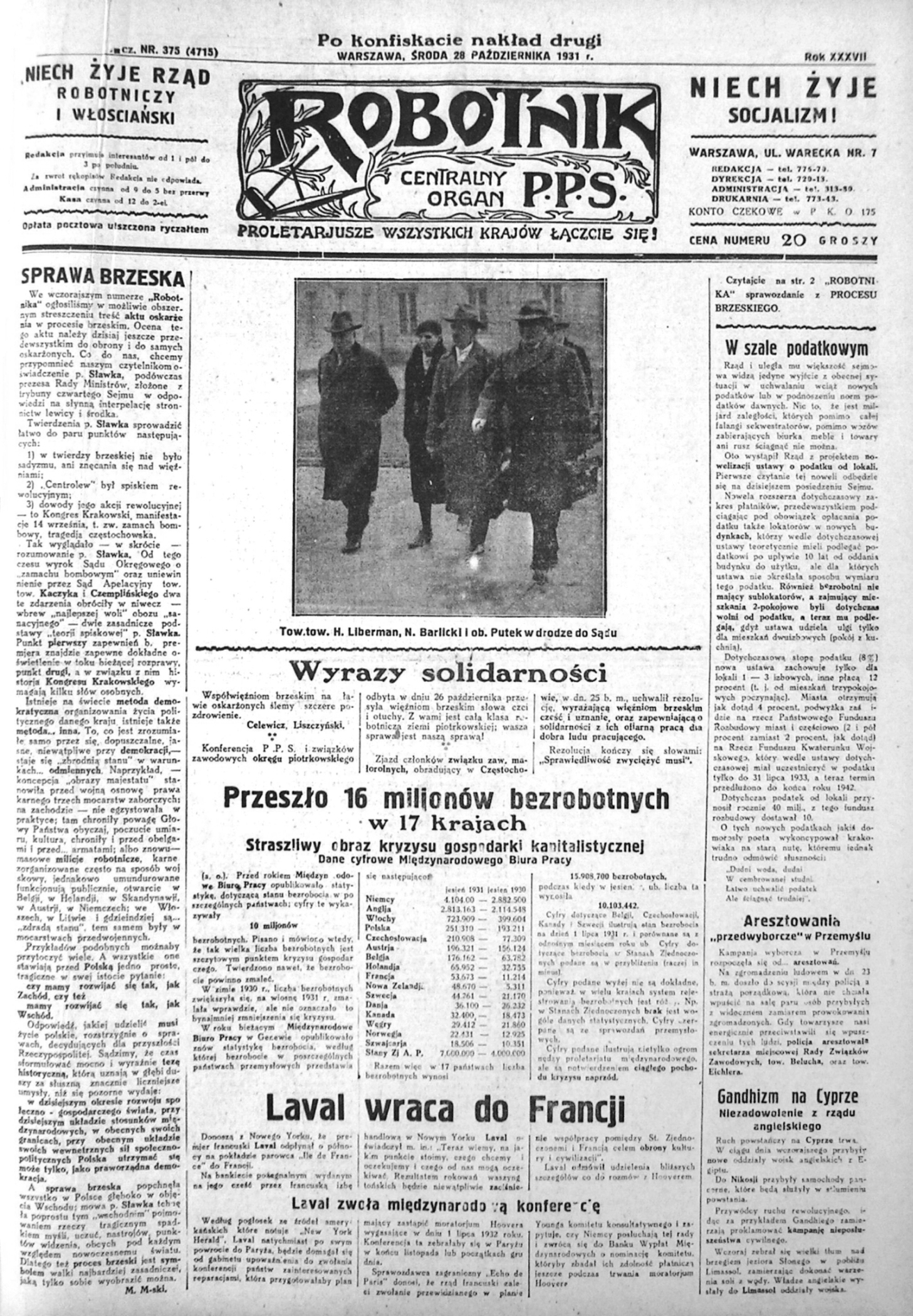
Trust written in the editor's own liberty. The medium was literally the resistance.
In 1894, Poland did not exist as a state. It had been partitioned for ninety-nine years between the Russian, Prussian, and Austro-Hungarian empires. The Polish Socialist Party launched Robotnik (The Worker) as an illegal underground paper - what Polish tradition calls bibuła - against all three.
The chief editor and primary writer was Józef Piłsudski, the future Chief of State of the Second Polish Republic. He also operated the press himself. To evade the Russian ochrana, the printing operation was mobile, hidden inside the private apartment Piłsudski shared with his wife in Łódź - using domestic married life as cover for a revolutionary press. In February 1900 the police finally raided the flat. The press was seized. Piłsudski went to the Warsaw Citadel.
The trust claim was written in jail time. A reader holding one of Robotnik’s 1,200 copies knew the paper’s makers had risked execution to print it. The truth of its socialist and pro-independence rhetoric was authenticated by the illegality of the ink. Bibuła would remain a Polish tradition through three more occupations across the next century.
Sources: en.wikipedia.org ↗